Inquiry
Form loading...
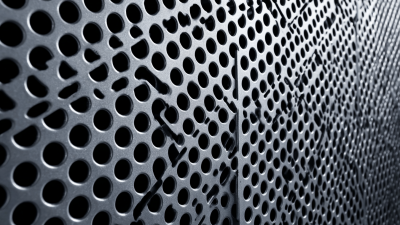
Decorative Perforated Sheet Metal combines visual texture with practical performance in architecture, interiors, retail, and industrial design. Manufacturers create it by punching or laser-cutting repeated openings into steel, aluminum, or other sheet materials. Hole shape, pitch, sheet thickness, and open-area percentage directly influence strength, airflow, light transmission, and acoustic behavior.
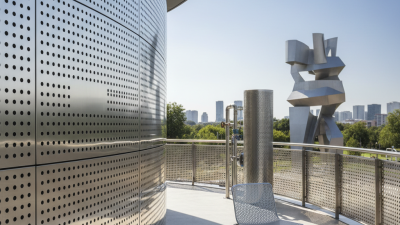
The World Steel Association’s World Steel in Figures 2024 reports that global crude steel production reached about 1.89 billion tonnes in 2023. This scale supports steel’s continued availability for durable building products. The United Nations Environment Programme’s 2023 Global Status Report for Buildings and Construction also states that buildings and construction represented approximately 37% of global energy and process-related emissions in 2022. These figures make material efficiency and long service life increasingly important. A perforated façade can shade windows, while still allowing filtered daylight and ventilation.
It looks simple.
Common applications include exterior screens, balcony guards, ceiling panels, elevator interiors, retail displays, room dividers, radiator covers, and acoustic wall surfaces. A dark powder-coated panel may soften sunlight across a glass façade. Indoors, a bronze-toned sheet can define a reception area without creating a solid visual barrier. However, decorative appeal alone does not guarantee performance. Designers should verify structural loads, corrosion resistance, fire requirements, cleaning access, and acoustic targets before specifying the product. Open-area calculations can also be overlooked, especially when patterns change near panel edges. Real projects need samples, not assumptions. This article examines where Decorative Perforated Sheet Metal performs best, how professionals select suitable specifications, and why attractive patterns sometimes require careful reconsideration.
What Is Decorative Perforated Sheet Metal Used For?
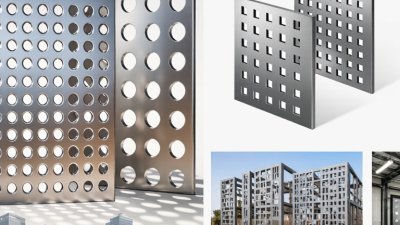
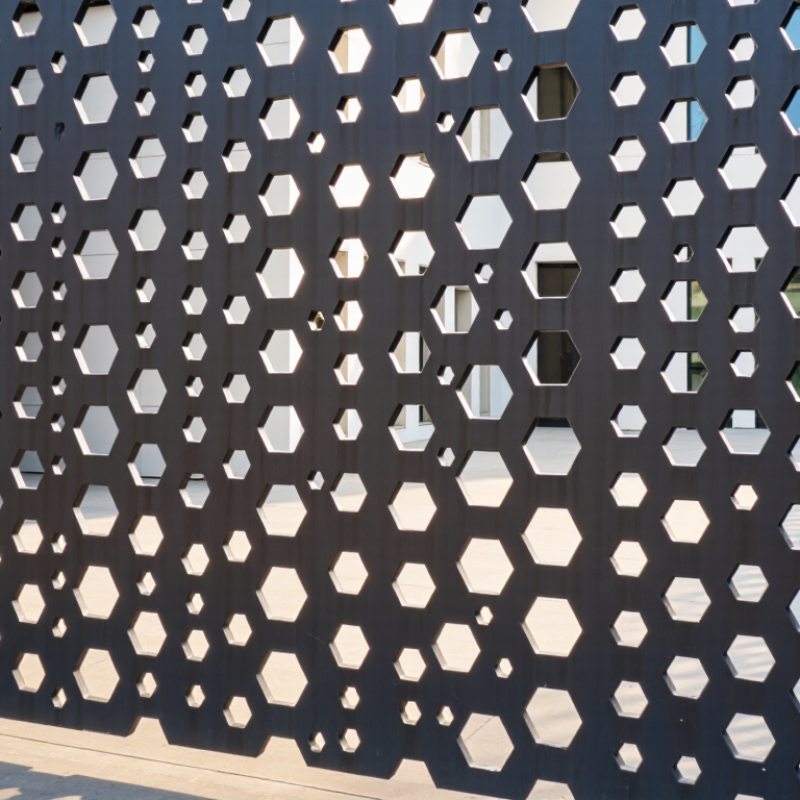
Decorative perforated sheet metal is a flat metal panel with repeated openings arranged in a visual pattern. Manufacturers create these holes by punching, laser cutting, or forming the sheet. Common materials include aluminum, steel, and brass. Hole shapes may be round, square, slotted, or custom-made. The pattern affects both appearance and performance.
It is used for building façades, ceiling panels, room dividers, balustrade infill, and privacy screens. In a lobby, a bronze-toned panel can filter sunlight while casting patterned shadows across the floor. In a restaurant, perforated metal can separate tables without making the room feel closed. Some panels also support airflow around equipment or cover radiators. Acoustic performance is possible, but it depends on backing materials and the percentage of open area.
Designers should check sheet thickness, hole spacing, edge strength, and corrosion protection before specifying a panel. A large opening pattern may look elegant but reduce rigidity. Bending can also distort the design. That detail is easy to overlook. Sharp edges, inaccurate measurements, and poor finishing can create installation problems. A reliable supplier should provide samples, tolerance information, and technical data before production. The most attractive pattern is not always the most practical one.
| Application | Typical Installation Area | Primary Function | Common Material Options | Design and Performance Considerations |
|---|---|---|---|---|
| Building Facades | Exterior walls, entrance elevations, and feature screens | Creates visual texture while providing partial solar shading and controlled transparency | Aluminum, galvanized steel, weather-resistant steel, or stainless steel | Opening size, pattern density, corrosion resistance, wind loading, and the required level of privacy should be evaluated |
| Interior Wall and Ceiling Panels | Commercial interiors, public buildings, restaurants, and reception areas | Adds a decorative finish and can conceal services, lighting, or acoustic materials | Aluminum, mild steel with a protective finish, or stainless steel | Panel alignment, edge detailing, cleanability, fire requirements, and access for maintenance are important |
| Room Dividers and Privacy Screens | Offices, hospitality spaces, retail areas, balconies, and residential interiors | Separates spaces without creating a completely solid barrier | Powder-coated aluminum, steel, or stainless steel | Smaller openings generally provide more visual privacy, while larger openings improve visibility and airflow |
| Balustrade and Railing Infill | Stairways, terraces, balconies, walkways, and platforms | Provides a rigid infill panel with a distinctive architectural appearance | Aluminum or stainless steel; coated steel may be used where suitable protection is provided | Structural strength, safe opening dimensions, edge protection, handrail design, and local building regulations must be considered |
| Sunshades and Brise-Soleil | Windows, curtain-wall areas, terraces, and external shading structures | Reduces direct sunlight and glare while allowing daylight and air movement | Aluminum is commonly selected for its low weight; steel can be used for heavier-duty structures | Orientation, perforation percentage, panel depth, shading geometry, and drainage affect performance |
| Acoustic Screens and Cladding | Ceilings, wall systems, equipment enclosures, and transportation or industrial areas | Allows sound to reach an absorptive backing material while protecting or concealing it | Perforated steel or aluminum combined with mineral wool, polyester fiber, or another acoustic absorber | Acoustic results depend on the perforated face, backing material, air cavity, and installation details rather than the metal sheet alone |
| Lighting Fixtures and Decorative Panels | Pendant lights, lamp shades, illuminated walls, and feature installations | Diffuses or filters light and creates patterned shadows or visual effects | Aluminum, stainless steel, brass, or coated steel | Pattern scale, light-source position, heat management, cleanability, and finish reflectivity influence the final appearance |
| Ventilation and Equipment Screens | Mechanical rooms, parking structures, generators, air-handling equipment, and service yards | Conceals equipment while maintaining airflow and access for inspection | Galvanized steel, aluminum, or stainless steel | Free open area, pressure drop, weather exposure, service access, noise control, and protection against debris should be assessed |
| Retail Displays and Signage Backdrops | Stores, exhibitions, showrooms, museums, and event spaces | Supports hooks, graphics, lighting, or display components while adding a structured visual background | Powder-coated steel, aluminum, or stainless steel | Load capacity, mounting method, repositioning needs, surface finish, and coordination with lighting are key factors |
| Decorative Gates and Fences | Residential, commercial, institutional, and landscape boundaries | Defines property edges and improves security or privacy without using a fully solid panel | Steel, aluminum, or stainless steel with a suitable exterior finish | Panel rigidity, post spacing, corrosion protection, opening dimensions, and gate hardware should match the site conditions |
| Furniture and Fixtures | Benches, cabinet doors, shelving, counters, and decorative inserts | Reduces visual mass and introduces ventilation or a lightweight patterned surface | Aluminum, stainless steel, or coated steel | Load requirements, exposed edges, fasteners, cleaning methods, and compatibility with adjoining materials affect durability |
| Filter and Guard Applications | Machine guards, protective covers, intake panels, and screens | Provides a barrier while permitting airflow, visibility, drainage, or passage of selected particles | Steel, stainless steel, or aluminum | Hole geometry, open area, sheet thickness, safety clearance, cleaning access, and resistance to impact must be selected for the application |