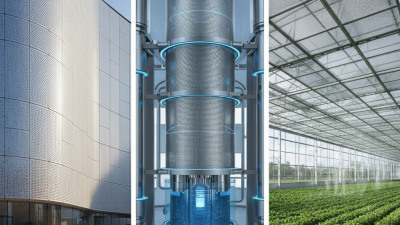
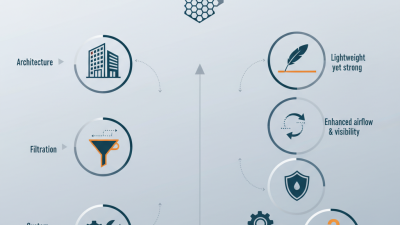
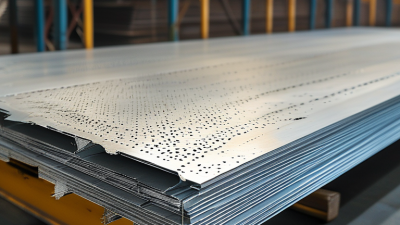
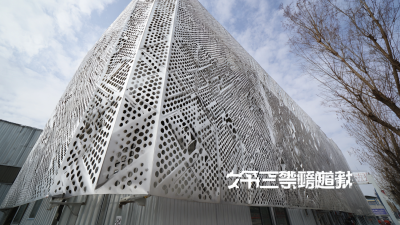
China has become a major sourcing destination for Perforated Metal Panels, serving architectural, industrial, acoustic, and ventilation projects worldwide. Its manufacturers offer aluminum, galvanized steel, stainless steel, and weather-resistant alloys. Panel options also vary by hole shape, open area, thickness, finish, and installation method.
Thomas Herzog, an architect known for lightweight building technology, said, “Architecture is the art of reconciling technology and nature.” That idea fits perforated façades well. A carefully selected panel can soften sunlight, improve airflow, reduce visual weight, and create a distinct exterior texture. In practice, a 2-millimeter aluminum sheet may produce a very different result from a 3-millimeter stainless steel panel. Hole spacing matters. So does the mounting system.
This guide examines China’s top Perforated Metal Panels manufacturers through practical criteria. These include material traceability, CNC punching accuracy, powder-coating consistency, tooling capability, packaging quality, and export experience. Factory audits and sample testing remain essential. Photographs alone are not enough.
Some suppliers excel at custom patterns. Others perform better with large, repeated orders. A low price can hide weak tolerances, inconsistent color, or poor edge finishing. That is the uncomfortable part.
No shortlist is flawless. Project conditions change. Engineers should verify wind loads, drainage, corrosion exposure, fire requirements, and local installation standards before approval. Buyers should also request recent project references and measurable inspection reports. The strongest manufacturers combine reliable production with honest technical communication. That combination is less dramatic than a beautiful sample, but far more valuable on site.
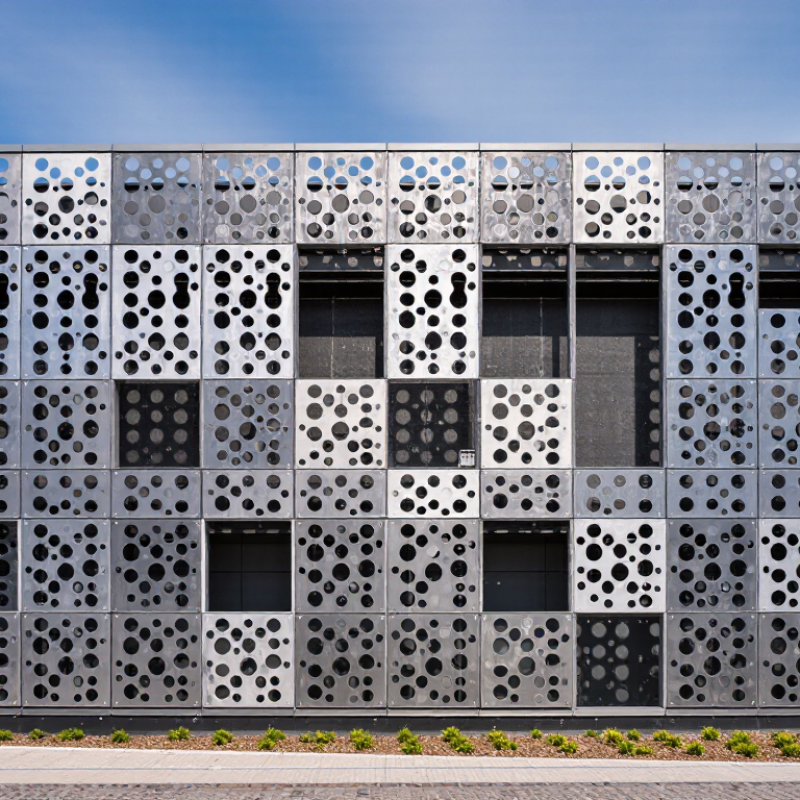
Perforated metal panels are flat sheets manufactured with repeated openings. These holes may be round, square, slotted, or custom-shaped. Common materials include steel, aluminum, and stainless steel. The pattern controls light, airflow, weight, and visual privacy. It also affects the panel’s strength.
Their uses are practical and visible. Architects install them as façade screens, balcony guards, ceiling panels, sunshades, and ventilation covers. Industrial facilities use them for machine guards, filters, platforms, and acoustic surfaces. The U.S. Department of Energy notes that external shading can reduce solar heat gain, although results depend on orientation and climate. Grand View Research’s market analysis also identifies construction, transportation, and industrial equipment as major application areas. Market forecasts differ. That difference deserves attention, because product definitions and regional data are not always consistent.
Tips: Select the opening ratio before choosing the finish. A higher open area improves airflow but reduces privacy and stiffness. Ask for material grade, sheet thickness, tolerance, corrosion testing, and load data. Small samples reveal sharp edges, uneven perforations, and color variation better than drawings. According to ASTM-related fabrication practice, edge quality and dimensional accuracy influence installation safety. Do not assume a decorative pattern performs structurally. Test it. Experienced buyers also check cleaning access, fastener compatibility, and replacement availability.
China’s perforated metal panel sector serves architecture, transport, equipment housing, and industrial screening. Material choice affects strength, corrosion resistance, weight, and finish. Common options include mild steel, galvanized steel, stainless steel, and aluminum. Stainless steel suits humid coastal projects. Aluminum reduces loads on façades and ceiling systems. Galvanized steel offers practical protection at a controlled cost. Yet no material fits every site.
Manufacturers usually begin with coil or sheet inspection. Automated punching creates round, square, slotted, or custom openings. Laser cutting handles complex patterns and smaller production runs. CNC turret punching remains efficient for repeated layouts. After forming, panels may be bent, welded, leveled, and deburred. Powder coating supports color stability and surface durability. Anodizing can preserve aluminum’s metallic appearance. Galvanizing protects steel, but edge treatment still deserves attention.
Experienced buyers should review open area, pitch, thickness, flatness, and tolerance records. Ask for samples, coating tests, and salt-spray data for severe exposure. Production drawings need clear hole direction and border dimensions. Small errors can affect installation alignment. Tolerances may be described differently by different suppliers. That requires careful inspection. A visually attractive panel can still fail when its edge return is too shallow. It looked minor. It was not. Reliable sourcing depends on traceable materials, documented inspections, and honest communication about limitations.
| Material | Common Alloy / Grade | Typical Thickness | Perforation Pattern | Typical Manufacturing Method | Key Performance Characteristics | Common Applications | Typical Surface Finish |
|---|---|---|---|---|---|---|---|
| Mild Steel | Q235 / equivalent low-carbon steel | 0.8–12 mm | Round, square, slotted, decorative custom patterns | CNC punching for thin and medium sheet; laser cutting for prototypes and complex designs | High structural strength, economical, easy to weld and fabricate | Machine guards, equipment screens, architectural facades, ventilation panels | Powder coating, paint, hot-dip galvanizing, or mill finish |
| Stainless Steel | 304 / 316L | 0.5–6 mm | Round, square, hexagonal, slotted, and custom patterns | CNC punching, laser cutting, deburring, and precision forming | Excellent corrosion resistance, hygienic surface, good durability | Food-processing equipment, chemical facilities, railings, exterior cladding | 2B, brushed, satin, mirror polished, or electropolished |
| Aluminum | 5052 / 6061 | 0.8–8 mm | Round, square, slotted, staggered, and architectural patterns | CNC punching or laser cutting, followed by bending and edge finishing | Low weight, good corrosion resistance, high design flexibility | Building facades, ceilings, sunshades, HVAC screens, acoustic panels | Anodized, powder coated, PVDF coated, or brushed |
| Galvanized Steel | DX51D / zinc-coated carbon steel | 0.8–5 mm | Round, square, rectangular, and louvered openings | Pre-galvanized sheet punching or post-fabrication hot-dip galvanizing | Improved atmospheric corrosion resistance and moderate structural strength | Outdoor screens, agricultural equipment, walkways, utility enclosures | Zinc coating, powder coating, or painted finish |
| Copper | Commercially pure copper | 0.5–3 mm | Round, square, decorative, and fine-detail patterns | CNC punching or laser cutting with controlled heat input | High electrical and thermal conductivity; develops a natural patina | Decorative interiors, electrical shielding, lighting, and specialty ventilation | Natural, clear lacquered, chemically patinated, or polished |
| Brass | Copper-zinc alloy | 0.5–3 mm | Round, square, hexagonal, and ornamental patterns | Precision punching, laser cutting, polishing, and forming | Decorative appearance, machinability, moderate corrosion resistance | Interior screens, signage, lighting fixtures, furniture, and decorative panels | Brushed, polished, antique, lacquered, or PVD coated |
| Expanded Metal | Carbon steel, stainless steel, or aluminum | 0.5–6 mm | Diamond, hexagonal, raised, or flattened mesh | Slitting and stretching in one continuous forming operation | High strength-to-weight ratio, open area, and slip resistance | Walkways, platforms, security barriers, filters, and architectural screens | Mill finish, powder coated, painted, anodized, or galvanized |
| Decorative Perforated Panel | Aluminum, stainless steel, mild steel, or brass | 1–5 mm | Custom geometric, floral, logo-free abstract, or image-based patterns | CNC punching for repeatable designs; fiber laser cutting for intricate artwork | Controlled light transmission, visual screening, ventilation, and design flexibility | Facade infill, balcony screens, partitions, ceilings, and interior feature walls | Powder coating, PVDF, anodizing, brushed, or natural metal finish |
Note: Thickness ranges and manufacturing methods are typical industry values. Final specifications depend on alloy, sheet size, opening geometry, open-area percentage, tolerances, and application requirements.
China Top Perforated Metal Panels Manufacturers
How to Evaluate Chinese Perforated Metal Panel Manufacturers
Evaluating Chinese perforated metal panel manufacturers requires more than comparing quotations. Start with technical fit. Ask for the alloy or steel grade, thickness, hole diameter, pitch, open-area ratio, and flatness tolerance. A reliable supplier should provide current mill certificates and inspection records. Request a physical sample. Samples expose shortcuts. Hold it under side light. Uneven holes and rough edges become obvious quickly. They matter during installation.
Factory experience is easier to verify through production evidence. Ask for recent photos, process details, equipment information, and a live video inspection. Check whether punching, deburring, coating, and packing follow controlled procedures. Quality should be measured, not promised. Confirm sampling frequency, gauge calibration, and rejected-panel handling. Records matter. You can also contact recent export customers, with permission. Vague references deserve caution.
Evaluate communication as part of quality. Technical drawings should return with clear revisions, not casual guesses. Confirm lead time, pallet protection, labeling, replacement terms, and documentation before paying a deposit. Test a small production order when possible. It reveals more than a polished factory tour. Price still matters, but the cheapest offer may hide uneven tolerances or delayed corrections. This judgment can feel uncomfortable. No checklist catches every problem. Leave room for inspection, questions, and a change of mind.
When evaluating Chinese perforated metal panel manufacturers, compare the material stated in the quotation with the material certificate and inspection report. Aluminum 5052 offers the lowest weight, while carbon steel and stainless steel provide higher density and are commonly selected when strength, durability, or corrosion resistance is prioritized. Actual performance also depends on thickness, hole pattern, open area, surface treatment, and manufacturing tolerances.
Reference values: approximate material densities at room temperature; values may vary by alloy grade and supplier specification.
Chinese perforated metal panel manufacturers generally fall into three groups: integrated steel processors, specialist perforation factories, and architectural metal fabricators.
Integrated producers offer coil sourcing, leveling, punching, cutting, and finishing under one system. Specialist factories often provide tighter hole patterns, faster sampling, and competitive production for standard panels. Architectural fabricators focus on façades, ceilings, screens, acoustic panels, and custom shapes.
According to the World Steel Association, global crude steel production reached about 1.89 billion metric tons in 2023. This large supply base supports material choices such as galvanized steel, aluminum, and stainless steel. A recent market assessment estimates the global perforated metal market will grow at roughly 5% annually through the decade.
Capable manufacturers should convert that demand into measurable performance. Ask for open-area calculations, hole-diameter tolerances, flatness data, and coating adhesion results. Small details matter.
CNC punching supports repeatable patterns. Laser cutting handles complex outlines. Powder coating improves color consistency, but surface preparation still decides durability.
For acoustic applications, manufacturers may combine perforated sheets with mineral wool or recycled polyester backing. Experienced buyers also review packing methods, because thin panels can arrive with bent edges.
Not glamorous. Still important.
Some factories advertise unlimited customization. That claim deserves questioning. A reliable supplier should explain tooling costs, minimum order quantities, inspection frequency, and realistic lead times.
Independent testing remains valuable, especially for façade wind loads, fire performance, and corrosion resistance. Product photographs are useful, but test records are stronger evidence.
Reliable perforated metal panels begin with measurable quality control. Manufacturers should verify sheet thickness, hole diameter, pitch, open area, and flatness. Common projects may require ASTM, EN, or ISO-based procedures, depending on destination and application. Coating adhesion, color consistency, and corrosion resistance also deserve documented inspection. A perfect-looking sample can still hide uneven edges or weak packaging.
Customization should follow the drawing, not guesswork. Buyers can specify aluminum, stainless steel, or carbon steel, along with round, square, or decorative patterns. Experienced manufacturers review load requirements, airflow, acoustic needs, and edge margins before production. They should provide shop drawings and samples for approval. Some suppliers promise every finish is identical, but real production can show small variations. Honest communication matters more than attractive claims.
Tips: Confirm tolerances before ordering. Request inspection records. Check export packaging details. Ask for moisture protection, corner guards, pallet strength, and container-loading photos. Clear labels and complete documents can reduce delays at the destination. Export service should include practical coordination, not only panel production. Even a minor mismatch in hole spacing may affect installation, so final approval should be careful.