China Top 10 Perforated Metal Screen Manufacturers?
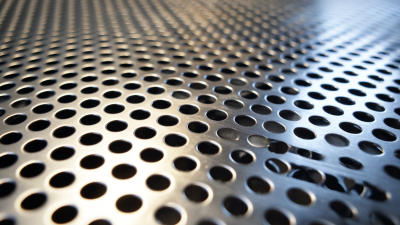
China’s perforated metal manufacturing sector supports architecture, transportation, filtration, machinery, and industrial safety applications. Perforated Metal Screen products can appear simple, yet every hole pattern affects strength, airflow, noise control, weight, and visual quality. Hole diameter, pitch, open area, sheet thickness, and edge treatment must work together.
Recent market studies show continuing demand. Grand View Research identifies construction, automotive, and industrial equipment as important application sectors for perforated metal. Mordor Intelligence also reports steady market growth, although published estimates differ by region, product definition, and research method. That difference matters. Buyers should not accept a market number without checking its date, scope, and original methodology.
As materials expert Michael F. Ashby explains, “Materials selection is a process of elimination.” His principle applies directly to perforated screens. A low-cost steel panel may fail where corrosion resistance, acoustic performance, or dimensional accuracy matters. In practice, experienced engineers compare galvanized steel, stainless steel, aluminum, and coated alloys against the working environment. They also inspect sample panels, not only digital catalogs.
This guide reviews China’s top ten Perforated Metal Screen manufacturers through measurable criteria. These include production capacity, tooling control, material traceability, tolerance management, finishing quality, export experience, and technical support. Factory visits and independent testing remain valuable. Some online claims are incomplete. That deserves attention.
The strongest supplier is not always the largest. It is the manufacturer that can consistently deliver the specified aperture, open area, flatness, and finish. This introduction sets a practical framework for comparing reliable Chinese producers and avoiding decisions based only on price.
Definition and Applications of Perforated Metal Screens
Definition and Applications of Perforated Metal Screens
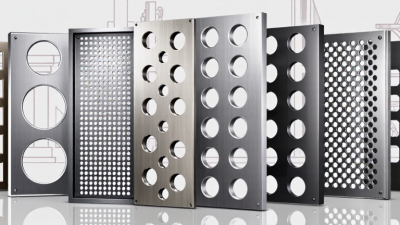
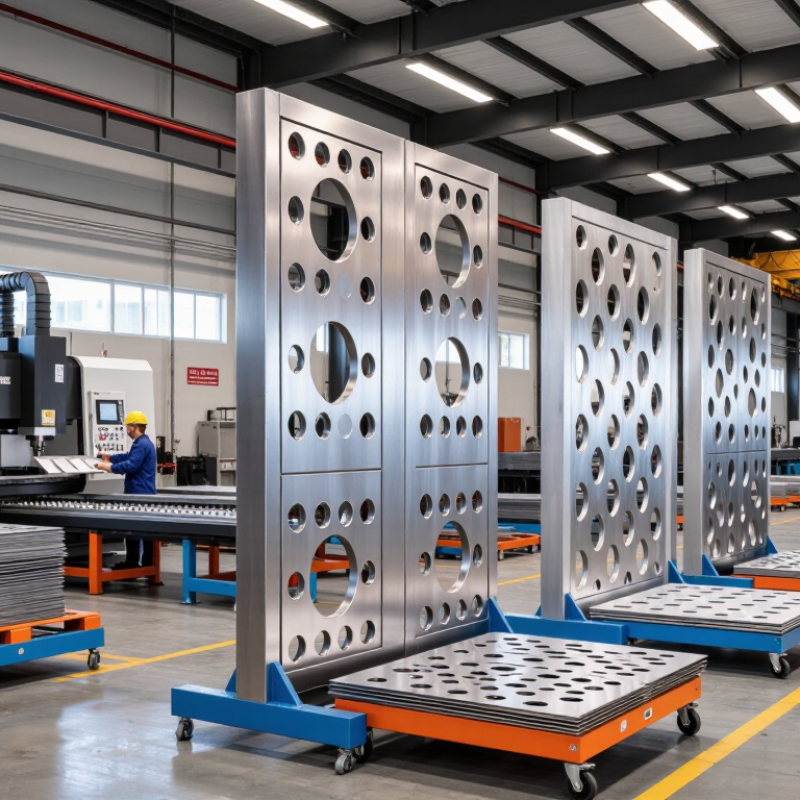
Perforated metal screens are flat sheets shaped by punching, drilling, or laser cutting. They contain repeated openings, called perforations. Hole diameter, pitch, open-area ratio, sheet thickness, and pattern define their performance. According to Grand View Research, the global metal fabrication market continues expanding with construction and industrial investment. This supports wider demand for engineered screen products, although perforated metal represents only one segment.
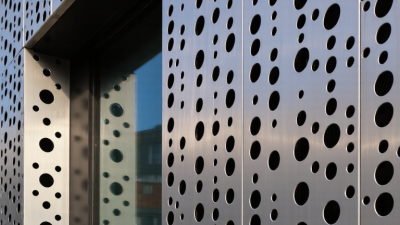
The applications are practical and highly visible. Architectural façades use screens to control sunlight, improve privacy, and add texture. Interior partitions can separate spaces without blocking airflow. In factories, perforated sheets support machine guards, filters, acoustic panels, and ventilation covers. The U.S. Department of Energy identifies solar control and daylight management as important building-design strategies. Properly selected perforated screens can reduce glare near windows while preserving useful daylight.
Performance depends on more than appearance. A 40% open area may improve airflow, but it can reduce strength and privacy. Corrosion resistance also changes with material, coating, edge treatment, and local climate. Recent MarketsandMarkets research shows growing demand for lightweight and sustainable materials in construction and manufacturing. However, recycled content alone does not prove quality. Buyers comparing China’s top ten manufacturers should request aperture tolerances, flatness data, salt-spray results, and load calculations. Some specifications look precise but omit installation conditions. That is a weakness worth questioning. A beautiful pattern can still fail when wind pressure, drainage, or maintenance is ignored.
China Top 10 Perforated Metal Screen Manufacturers? - Definition and Applications of Perforated Metal Screens
Anonymous market-reference profiles based on commonly manufactured perforated metal screen configurations in China
| No. |
Typical Manufacturer Capability Profile |
Common Material |
Hole Pattern and Shape |
Typical Thickness |
Typical Open Area |
Typical Applications |
| 1 |
High-volume architectural screen production |
Aluminum sheet |
Round holes, staggered layout |
1.0–3.0 mm |
30–60% |
Building façades, ceilings, balcony panels, sunshades |
| 2 |
Heavy-duty industrial screen production |
Carbon steel |
Round or square holes |
2.0–8.0 mm |
25–55% |
Machine guards, platforms, equipment covers, screening panels |
| 3 |
Corrosion-resistant process equipment fabrication |
304 or 316 stainless steel |
Round holes, staggered layout |
0.8–5.0 mm |
20–55% |
Food processing, chemical equipment, ventilation, filtration |
| 4 |
HVAC and acoustic panel manufacturing |
Galvanized steel |
Small round or square holes |
0.6–2.0 mm |
15–45% |
Air diffusers, ventilation grilles, acoustic ceilings, wall panels |
| 5 |
Mining and aggregate screening fabrication |
Abrasion-resistant steel |
Large round or square holes |
4.0–12.0 mm |
30–65% |
Material grading, conveyor protection, crusher guards, bulk handling |
| 6 |
Fine filtration and screening production |
Stainless steel or nickel alloy |
Micro-round holes |
0.3–2.0 mm |
10–40% |
Liquid filtration, laboratory equipment, sieving, burner components |
| 7 |
Security and protective enclosure fabrication |
Carbon steel or stainless steel |
Square or rectangular holes |
1.5–6.0 mm |
20–50% |
Security doors, equipment enclosures, safety barriers, machine guards |
| 8 |
Decorative and interior design screen production |
Aluminum or brass sheet |
Custom geometric patterns |
0.8–3.0 mm |
20–70% |
Room dividers, feature walls, signage, furniture inserts |
| 9 |
Agricultural and grain-processing screen production |
Galvanized steel or stainless steel |
Round or slotted holes |
1.0–4.0 mm |
25–55% |
Grain cleaning, seed separation, drying equipment, feed processing |
| 10 |
Custom CNC perforation and fabricated assemblies |
Steel, aluminum, or stainless steel |
Round, square, slotted, or custom shapes |
0.5–10.0 mm |
10–70% |
OEM components, prototypes, filtration parts, architectural assemblies |
Note: The figures above are typical engineering ranges used for product selection; actual values depend on sheet grade, hole diameter, pitch, tolerance, forming method, and required surface finish.
China’s Top 10 Perforated Metal Screen Manufacturers
China’s Top 10 Perforated Metal Screen Manufacturers
China’s perforated metal screen sector benefits from strong steel production and deep fabrication capacity. World Steel Association data shows China produced about 1.02 billion tonnes of crude steel in 2023. This scale supports varied materials, including galvanized steel, aluminum, stainless steel, and weathering steel.
Grand View Research estimates that the global perforated metal market will expand steadily through 2030, with demand driven by architecture, filtration, acoustic control, and industrial safety. China’s top ten manufacturers should therefore be judged beyond price. Practical indicators include hole tolerance, sheet flatness, repeatability, edge quality, and documented testing. A reliable factory should provide mill certificates, inspection records, production samples, and clear capacity information. ISO 9001-based quality systems can add confidence, but certification alone proves little.
Real project experience matters. A qualified producer should explain how drilling patterns affect airflow, weight, light transmission, and structural strength. Laser cutting may suit complex layouts, while punching usually offers better efficiency for large volumes. Small details matter. Burrs can damage coatings and installation teams.
A ranking can still mislead. Public data rarely separates perforated screens from wider metal products. Some capacity claims also lack independent verification. Buyers should compare drawings, tolerances, samples, lead times, and corrective-action records before accepting a top-ten position. That extra review is slower, but often more reliable.
China’s Top 10 Perforated Metal Screen Manufacturers
This chart compares the density of ten commonly used metals in perforated screen production. Density is a factual engineering property that affects panel weight, transportation cost, structural loading, and material selection. The chart is a technical industry reference and does not display company or brand-specific data.
Materials, Production Methods, and Quality Standards
China’s top ten perforated metal screen manufacturers are often compared by more than price. Material selection reveals their real production capability. Aluminum suits lightweight façades and ventilation panels. Stainless steel handles moisture, heat, and demanding public spaces. Carbon steel remains practical for guards, partitions, and industrial enclosures.
Experienced manufacturers match thickness, hole diameter, pitch, and open-area ratio before cutting. Round, square, slotted, and decorative patterns require different tooling settings. Laser cutting gives flexible prototypes and clean complex edges. Punching machines usually deliver faster output for repeated patterns. After forming, panels may receive leveling, deburring, powder coating, anodizing, or galvanizing.
Quality evidence matters. Reliable factories should provide material certificates, dimensional inspection records, coating tests, and traceability documents. Useful references include ISO 9001 procedures, ASTM or EN test methods, and applicable GB/T requirements. Inspectors should check hole size, sheet thickness, flatness, burrs, color consistency, and weld quality. Small samples can hide production problems. Full-batch inspection is safer.
A capable supplier also confirms packaging and installation tolerances. Crushed corners can ruin accurate panels before they reach the site. Some manufacturers communicate well during sampling, then respond slowly during mass production. That weakness deserves attention. Buyers should request approved drawings, a control plan, and inspection photos before shipment. Performance depends on details, not impressive factory claims.
How to Choose the Right Chinese Manufacturer for Your Project
Choosing a Chinese perforated metal screen manufacturer requires more than comparing quotations. China produced 1,019.1 million tonnes of crude steel in 2023, equal to 53.9% of global output, according to World Steel Association data. This capacity is valuable, but it does not guarantee consistent screen quality. Ask for material certificates, production photos, and recent inspection records before approving samples.
Define the technical details in writing. Confirm metal grade, sheet thickness, hole diameter, pitch, open area, edge margins, and dimensional tolerance. A reliable supplier should explain how punching affects burrs, flatness, and coating adhesion. Request a first-article sample, then measure it with calipers and compare the open area against the drawing. Small errors can create visible alignment problems on a large façade.
Supplier audits reveal more than polished websites. Check whether the factory controls incoming coils, tooling wear, and final packaging. ISO 9001 certification supports process control, but it is not proof of perfect production. Ask for an inspection plan based on ISO 2859-1 or an agreed sampling level. Also verify EN 10204 3.1 certificates when traceability matters. Incoterms, export packing, replacement policy, and response times deserve equal attention. The cheapest offer may exclude tooling, testing, or protective film. That is easy to miss. My own caution is simple: even a strong sample can hide batch variation, so approve a pilot order before committing to full volume.