Inquiry
Form loading...

What Is Perforated Metal Plate Used For?

Perforated Metal Plate appears in places where strength, airflow, light control, and visual design must work together. It is used for machine guards, acoustic wall panels, ventilation covers, filtration screens, stair treads, sunshades, and decorative building facades. The holes may look simple, but their pattern affects performance.

John H. Hendrick, a pioneer in perforated-metal manufacturing, once observed, “The value of perforated metal lies in matching the opening to the job.” That principle remains relevant. A kitchen ventilation panel may require small, closely spaced holes to block grease particles. A factory safety guard may need larger openings for visibility and cooling. An architectural screen may focus more on shadow patterns than airflow.

Material choice matters. Steel offers rigidity. Aluminum reduces weight. Stainless steel performs better in damp or corrosive environments. Designers also consider sheet thickness, hole diameter, pitch, open area, edge strength, and surface treatment. A poorly selected pattern can vibrate, clog, weaken, or create difficult cleaning points.

The real application is rarely perfect.

Site conditions often change the original plan. Dust, rain, noise, and maintenance access can expose weaknesses that drawings miss. Experienced fabricators test samples before full production. They check fit, drainage, sharp edges, and visual consistency under real lighting.

This guide explores what Perforated Metal Plate is used for across construction, manufacturing, transportation, and interior design. It also considers practical limitations, installation choices, and the mistakes that can make a suitable plate perform poorly.
What Is Perforated Metal Plate Used For?

What Is Perforated Metal Plate?

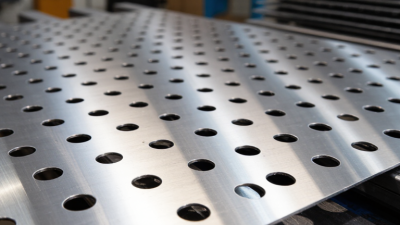
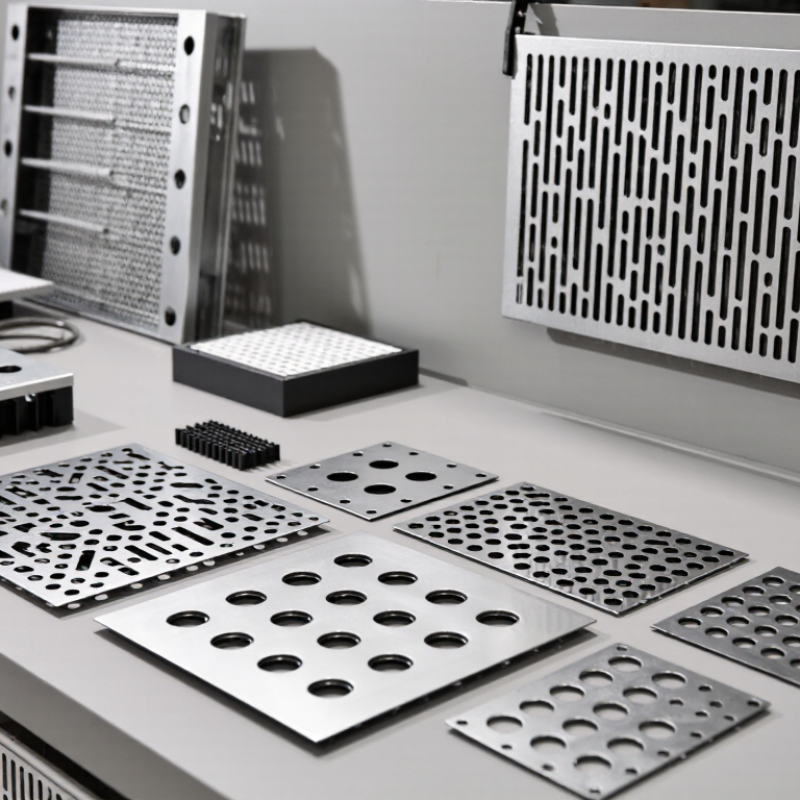
Perforated metal plate is a flat sheet or plate formed with repeated openings. Machines punch, drill, or laser-cut holes through steel, aluminum, stainless steel, or other metals. The holes may be round, square, slotted, or custom-shaped. Its identity depends on more than appearance. Thickness, hole diameter, pitch, open area, edge margin, and burr direction affect performance.

The 2024 World Steel in Figures report recorded about 1,888 million tonnes of crude steel production in 2023. Steel remains a major engineering material, and perforation can reduce weight without removing the plate’s overall structure. The material choice still matters. Aluminum is lighter, while stainless steel offers stronger corrosion resistance. A perforated plate may act as a screen, guard, diffuser, filter support, acoustic panel, or ventilation surface. It is also used on machinery covers, walkways, building facades, and agricultural equipment.

Open area is a practical measurement. A plate with 40% open area allows more airflow than one with 20%, but it may provide less shielding. The U.S. Department of Energy’s 2022 Industrial Decarbonization Roadmap identifies steel and metal processing as energy-intensive industries, so efficient material use deserves attention. That sounds simple, but design errors are common. Designers sometimes specify hole size without checking strength, noise, cleaning access, or corrosion exposure. A successful plate balances those details, not just a neat pattern.
What Is Perforated Metal Plate Used For?

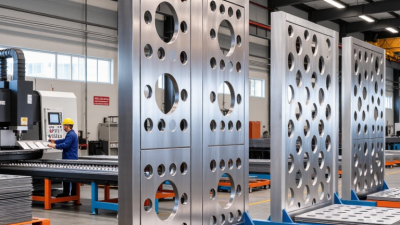
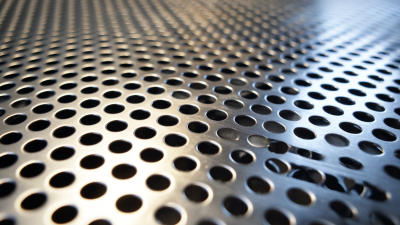
Perforated metal plate is used for ventilation grilles, machine guards, screening, acoustic panels, filters, walkways, and architectural façades. Its open area affects airflow, visibility, filtration, and sound absorption.

The chart shows calculated open-area percentages for round holes in a staggered pattern. The values use the standard approximation: open area = 90.7 × (hole diameter ÷ hole pitch)². Higher open area generally allows greater airflow and visibility, while lower open area provides more screening and surface coverage.

How Perforated Metal Plates Are Made

Perforated metal plates begin as flat sheets or coils of steel, aluminium, or other alloys. The World Steel Association reported 1.89 billion tonnes of crude steel production in 2023. The International Aluminium Institute recorded about 70.6 million tonnes of primary aluminium in the same year. These figures show the scale of the material supply behind industrial perforation.

Manufacturers usually select punching, laser cutting, or rotary perforation. A CNC punch drives shaped tools through the sheet at controlled spacing. It is fast and economical for repeated hole patterns.

Rotary systems suit continuous coil production. Laser cutting handles complex layouts, but it can leave a heat-affected edge. That edge needs inspection.

Small details matter.

Engineers check hole diameter, pitch, burr height, flatness, and open area. For a 60-degree staggered round-hole pattern, the approximate open area is 90.7(d/c)², where d is hole diameter and c is pitch. A higher open area improves airflow but reduces stiffness. In fabrication practice, a clean-looking plate may still warp after punching. I would not approve a batch from appearance alone. Samples should be measured with calibrated tools, then compared with the drawing. Some projects also require levelling, deburring, or protective finishing after perforation. The best process depends on thickness, alloy hardness, pattern accuracy, production volume, and the plate’s final use.

Key Uses of Perforated Metal Plates

Perforated metal plates serve practical roles in architecture, manufacturing, transport, and building services. Their repeated holes reduce weight while preserving useful stiffness. Hole size, pitch, open area, and metal thickness control performance.

In façades and ceiling systems, perforated plates provide ventilation, solar shading, and visual screening. They can soften daylight without completely blocking airflow. This matters in parking structures and plant rooms. The U.S. Department of Energy identifies building energy use as a major efficiency target, making passive shading increasingly relevant. Perforated plates also appear in acoustic panels, where holes expose an absorptive layer behind the metal. The result depends on cavity depth and insulation, not appearance alone.

Industrial users install them as machine guards, walkways, platforms, and protective covers. They also support grain drying, air filtration, speaker grilles, and equipment ventilation. A 2024 Grand View Research analysis projects continued growth in the global perforated metal market, driven partly by construction and industrial applications. Yet performance claims need careful testing. A plate with a high open-area percentage may improve airflow but lose strength. A tight pattern may look cleaner but restrict ventilation. The specification is not always perfect on the first pass. Engineers should check corrosion exposure, load requirements, noise targets, and cleaning access before production. Small design errors become expensive at scale.

Benefits and Performance Features

What Is Perforated Metal Plate Used For?

Benefits and Performance Features

Perforated metal plate supports ventilation, screening, filtration, and noise control in many projects. Its repeated holes allow air, light, or liquid to pass through. Solid sections still provide structure and impact resistance. In equipment enclosures, the plate can protect moving parts while releasing trapped heat. It also works well for walkways, machine guards, ceiling panels, and architectural facades.

Performance depends on more than hole size. Engineers must check open area, plate thickness, material grade, and loading conditions. A smaller hole pattern improves screening but may restrict airflow. A larger pattern increases ventilation but can reduce stiffness. During site inspections, sharp edges and poor fastening often cause more trouble than the plate itself. Deburring and secure fixings matter.

Perforated plate is also easier to clean than many woven screens. Its rigid surface resists sagging and keeps a consistent appearance. Metal choices may include steel, aluminum, or stainless steel, depending on weight and corrosion exposure. Outdoor installations need suitable coatings or corrosion-resistant materials. Moisture can still enter around fasteners. That detail is easy to overlook. Acoustic performance also requires testing, because open patterns alone do not guarantee effective sound reduction. Some designs look efficient but perform poorly when airflow, vibration, and maintenance access are ignored.

How to Choose the Right Perforated Metal Plate

What Is Perforated Metal Plate Used For?

How to Choose the Right Perforated Metal Plate

Choosing perforated metal plate starts with the job, not the pattern. For ventilation screens, calculate required airflow and open area before selecting a sheet. The U.S. Department of Energy reports that heating, ventilation, and air conditioning can represent about 40% of commercial building energy use. A restrictive pattern may increase fan demand. That detail is easy to overlook. Measure it.

Select the metal according to exposure and loading. Aluminum suits lightweight façades and interior panels. Carbon steel offers strength, but it needs suitable corrosion protection outdoors. Stainless steel performs better in humid or chemically aggressive locations, although its cost can rise sharply. The World Steel Association reported global crude steel production of about 1.89 billion tonnes in 2023. Supply is broad, but availability does not guarantee the right grade. Confirm thickness, tensile requirements, and the supplier’s test records.

Hole shape, diameter, pitch, and stagger also affect performance. Small round holes provide a controlled appearance and can improve screening. Larger openings reduce weight and may improve airflow. For acoustic applications, laboratory testing matters more than visual assumptions. ASTM C423 evaluates sound absorption in reverberation rooms, while ASTM E795 addresses specimen mounting. Ask for tested results. Real projects are rarely perfect. Installation frames, vibration, and dirt can change performance. Review those conditions before approving the drawing.

What Is Perforated Metal Plate Used For? - How to Choose the Right Perforated Metal Plate

Typical values vary according to the metal grade, perforation pattern, sheet thickness, loading conditions, and applicable project standards.
Application Primary Function Common Material Options Typical Thickness Suitable Hole Pattern Important Selection Considerations
Machine Guards and Safety Screens Restricts access to moving parts while allowing visibility and ventilation. Mild steel, galvanized steel, stainless steel, aluminum 1.2–3.0 mm Round or square holes with small openings Check safety clearance, edge sharpness, structural rigidity, and the required viewing area.
Air Intake and Ventilation Panels Permits airflow while screening out larger debris and providing a protective cover. Aluminum, galvanized steel, stainless steel 1.0–2.5 mm Round holes with medium-to-high open area Balance open area, pressure drop, noise, weather exposure, and cleaning requirements.
Acoustic Panels and Equipment Enclosures Allows sound to reach an absorptive layer while protecting internal components. Powder-coated steel, aluminum, stainless steel 0.8–2.0 mm Small round or precision slots Consider acoustic frequency, open area, airflow, fire requirements, and the thickness of the sound-absorbing backing.
Filtration and Screening Separates particles, supports filter media, or removes larger solids from a flow stream. Stainless steel, aluminum, galvanized steel 0.5–3.0 mm Round, square, or slotted openings Specify particle size, flow rate, pressure difference, corrosion exposure, and cleanability.
Architectural Facades and Ceilings Provides visual screening, solar control, ventilation, and decorative surface treatment. Aluminum, weather-resistant steel, stainless steel 1.5–4.0 mm Round, square, slotted, or custom patterns Evaluate wind load, panel size, finish durability, drainage, sightlines, and fixing details.
Sunshades and Privacy Screens Reduces direct solar exposure and improves privacy without forming a solid barrier. Aluminum, galvanized steel, stainless steel 2.0–5.0 mm Slotted or staggered round holes Select the pattern according to shading angle, required privacy, wind load, and visual transparency.
Walkways, Platforms, and Stair Treads Creates a slip-resistant walking surface with drainage and reduced weight. Carbon steel, galvanized steel, stainless steel 2.0–6.0 mm Raised, embossed, or perforated anti-slip patterns Verify load rating, span, slip resistance, drainage, support spacing, and applicable safety codes.
Grain Drying and Agricultural Equipment Supports material flow and promotes controlled air circulation during drying or handling. Galvanized steel, stainless steel, aluminum 1.0–3.0 mm Round or slotted openings selected for the material size Match hole size to the product, prevent clogging, and consider abrasion, moisture, hygiene, and cleaning.
Decorative Interior Panels and Furniture Adds texture, light filtration, ventilation, and visual separation. Aluminum, mild steel, stainless steel 0.8–2.0 mm Round, square, slotted, or custom decorative patterns Prioritize appearance, flatness, edge finishing, coating compatibility, cleaning, and mounting method.

Key Specifications to Confirm Before Ordering

  • Base metal grade and corrosion-resistance requirements
  • Sheet thickness, panel dimensions, and allowable deflection
  • Hole shape, hole size, pitch, arrangement, and open area percentage
  • Required airflow, drainage, filtration accuracy, or acoustic performance
  • Surface finish, edge treatment, tolerances, and installation method
  • Relevant structural, safety, fire, hygiene, or environmental requirements