Inquiry
Form loading...

What Is the Best Perforated Metal Sheet from China?

Choosing the best Perforated Metal Sheet from China requires more than comparing prices. The right product must match the application, material, hole pattern, thickness, and finishing environment. A façade may need precise round holes and weather-resistant coating. A filtration panel may demand tighter tolerances and clean edges. These details affect airflow, strength, appearance, and service life.

As perforation engineer Chen Wei explains, “A good perforated sheet begins with the application, not the catalog.” This practical view matters when evaluating Chinese suppliers. Ask for material certificates, dimensional tolerances, open-area calculations, and production samples. Check whether the supplier understands your required hole diameter, pitch, margin, and sheet direction. Even a small mismatch can complicate installation.

Quality should be visible.

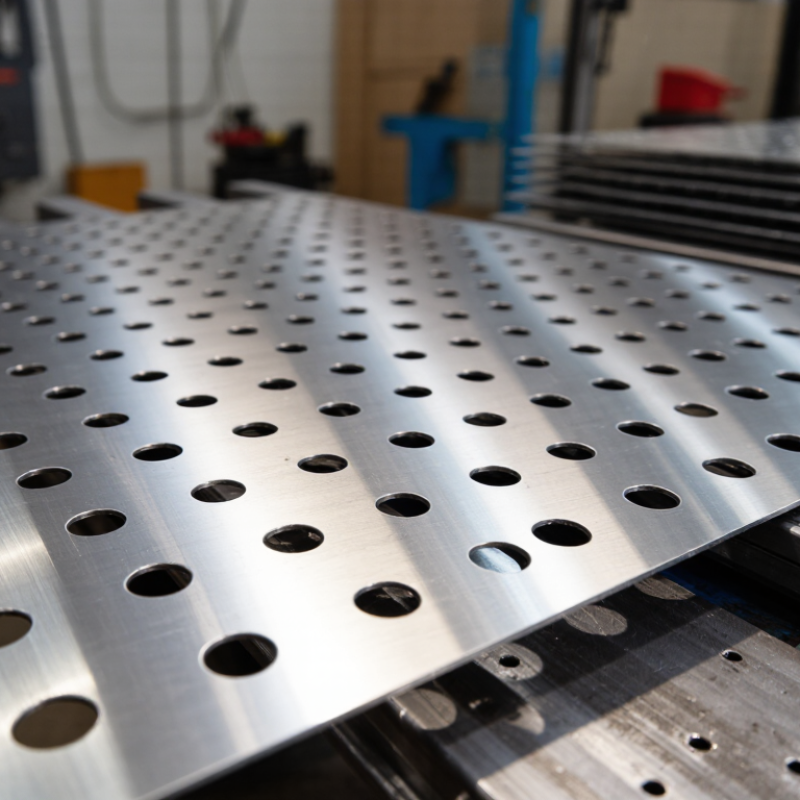
Look closely at the sample. Are the holes evenly formed? Do the edges show tearing, burrs, or distortion? Is the coating consistent around the perforations? Reliable manufacturers usually provide inspection records and explain their testing methods. Still, documentation alone is not enough. A polished certificate cannot repair a poorly packed shipment or an inaccurate drawing.

The lowest quotation may look attractive, but it may hide weaker steel, unstable tolerances, or limited technical support. I would also avoid assuming that every Chinese factory offers the same capability. That assumption is convenient, and wrong. This guide examines how to compare suppliers, materials, manufacturing quality, customization, and delivery reliability before selecting the best Perforated Metal Sheet for your project.
What Is the Best Perforated Metal Sheet from China?

What Defines the Best Perforated Metal Sheet from China?

The best perforated metal sheet from China is not simply the cheapest option. It is defined by stable quality, accurate holes, and dependable documentation. In practical sourcing, I check hole diameter, pitch, open area, sheet thickness, flatness, and edge condition. A small burr can damage filters, airflow, or worker safety. It is an unglamorous detail.

The World Steel Association reported global crude steel production of about 1.89 billion tonnes in 2023. This shows China’s strong manufacturing capacity, but capacity does not guarantee precision. The better supplier controls tooling wear, measures samples with calibrated equipment, and records batch results. For stainless steel, the International Stainless Steel Forum reported global production of about 58.4 million tonnes in 2023. Material grade and corrosion performance therefore deserve written verification. Ask for chemical reports, dimensional inspection records, and EN 10204 3.1 certificates when suitable. Some buyers focus too much on appearance. That is a mistake.

Tips: Request a trial batch before placing a large order. Compare three samples under the same light. Measure open area, hole pitch, thickness, and diagonal flatness. Confirm the standard, tolerance, packaging, and coating thickness in the purchase contract. Also inspect protective film and pallet strength. Even good sheets can arrive bent after careless transport. A supplier that answers technical questions clearly is usually more reliable than one offering only a low price. Still, verify everything. Industry reports describe market capacity, not your actual shipment.

Which Materials and Hole Patterns Are Available?

The best perforated metal sheet from China depends on material, environment, and hole design. Carbon steel suits machine guards, platforms, and indoor panels because it offers strength at a competitive cost. Stainless steel performs better near moisture, food-processing areas, and coastal air. Aluminum is lighter and easier to install, although it can dent under impact.

The International Aluminium Institute reported about 70.6 million tonnes of primary aluminum production in 2023, showing the material’s strong global supply base.
The World Steel Association recorded roughly 1.89 billion tonnes of crude steel production in 2023, supporting wide material availability.

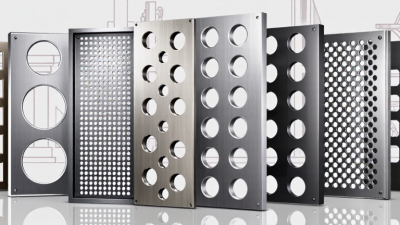
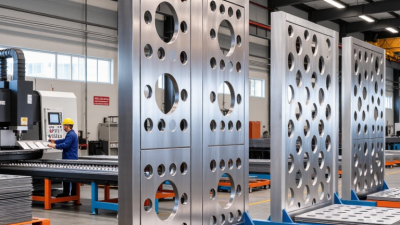
Hole patterns change performance more than many buyers expect. Round holes provide balanced airflow and structural strength. Square holes offer a more open appearance. Slotted holes guide airflow, drainage, or visual direction. Hexagonal patterns can increase open area while keeping a relatively regular structure.

Common open areas range from 20% to 60%, but higher openness can reduce stiffness. Small 3 mm holes feel precise; 20 mm holes look more industrial. Details matter.

For a practical selection, compare thickness, pitch, open area, edge margin, and surface treatment. Galvanizing helps carbon steel resist corrosion, while powder coating adds color and another protective layer. I have seen drawings choose a beautiful pattern that later caused weak edges and difficult cleaning. That mistake is easy to miss.

Ask for samples, dimensional reports, and corrosion-test evidence before approving production. Scrap rates, deburring quality, and flatness also deserve attention. Cheap sheets are not always economical.

How to Evaluate Quality, Strength, and Corrosion Resistance

What Is the Best Perforated Metal Sheet from China?

A reliable perforated sheet starts with traceable material data, not a polished surface. Request the mill certificate, alloy grade, thickness tolerance, and batch number.

For structural use, compare tensile and yield strength under ASTM E8 testing. Hole diameter, pitch, and open area also matter.

A 2 mm sheet with excessive burrs can fail during forming, even when its nominal strength looks acceptable. Inspect the cut edge closely.

Corrosion resistance needs a site-specific assessment. ISO 9223 classifies atmospheric exposure from low to extreme corrosivity.

Coastal air, road salt, and trapped moisture can quickly attack carbon steel.

AMPP’s IMPACT study estimated global corrosion costs near US$2.5 trillion, or 3.4% of global GDP.

That figure makes coating selection more than a cosmetic decision.

Ask for coating thickness, adhesion results, and relevant salt-spray data under ASTM B117. Salt spray helps compare finishes, but it does not perfectly predict outdoor service life.

Stainless steel may suit humid environments, while galvanized steel can offer practical protection at lower cost.

Yet stainless grade alone is not enough. Poor passivation, contaminated tooling, or damaged edges can create early staining.

I would sample several sheets from different bundles. Check flatness, burr height, hole uniformity, and coating damage under strong side lighting.

Certificates can be correct. Production can still vary.

How to Choose the Right Chinese Manufacturer and Certification

Choosing the best perforated metal sheet starts with the manufacturer, not the lowest quote. The World Steel Association’s World Steel in Figures 2025 reports that China produced 1,005.1 million tonnes of crude steel in 2024. That scale supports strong supply capacity, but it does not guarantee punching accuracy. Ask for mill certificates, heat numbers, thickness tolerances, open-area calculations, and production photos from your actual batch. Check burr height, flatness, hole pitch, and protective packaging. Small details matter.

Verify the manufacturer’s current ISO 9001 certificate through the issuing body. The ISO Survey 2023 recorded 1,265,216 ISO 9001 certificates worldwide, so certification is common, not exclusive. Confirm the certificate scope, factory address, expiry date, and covered processes. Request an EN 10204 3.1 inspection document where applicable. For ASTM or EN projects, state the exact standard edition and testing method in the contract. “Compliant” is too vague.

Use an independent pre-shipment inspection to measure hole diameter, pitch, sheet gauge, length, and coating. Ask whether instruments are calibrated. For stainless steel, positive material identification can verify the grade. Traceability should connect the coil to each finished bundle. I would not trust a perfect PDF alone. Documents can look correct while production drifts. A video audit helps, but it cannot replace physical inspection. Even capable factories may miss flatness limits. That uncomfortable possibility deserves attention. Compare sample panels under the same light, and record acceptance tolerances before payment.

What Is the Best Perforated Metal Sheet from China? — How to Choose the Right Chinese Manufacturer and Certification
Evaluation Dimension Recommended Specification or Evidence Why It Matters What to Request from the Manufacturer
Base Material Carbon Steel Stainless Steel Aluminum Galvanized Steel Material selection affects corrosion resistance, weight, strength, weldability, and total service life. Material grade, chemical composition, mechanical properties, and the original mill test certificate.
Common Stainless-Steel Grades 304 for general indoor and moderately corrosive environments; 316 or 316L for chloride exposure, coastal areas, and chemical-processing applications. Higher-alloy stainless steel generally provides better resistance to chlorides and aggressive environments. Grade designation, heat number, chemical analysis, and material traceability from raw material to finished sheet.
Sheet Thickness Typical commercial ranges are approximately 0.5–12 mm, subject to the material, hole pattern, sheet size, and forming requirements. Thickness influences rigidity, impact resistance, weight, acoustic performance, and fabrication cost. Nominal thickness, permitted tolerance, measurement method, and a dimensional inspection report.
Hole Shape Round Square Slotted Rectangular Decorative Hole geometry controls airflow, screening efficiency, visual appearance, structural strength, and cleaning behavior. Approved drawing showing hole dimensions, orientation, pattern, edge margins, and dimensional tolerances.
Open Area Usually specified as a percentage of the sheet area. For a 60-degree staggered round-hole pattern, the approximate open-area formula is: Open Area (%) = 90.69 × d² ÷ C², where d is hole diameter and C is hole-center spacing. Open area determines airflow, light transmission, drainage, filtration capacity, and the remaining load-bearing metal. Calculated open-area percentage, hole-size report, pitch measurement, and a production sample for approval.
Hole-to-Thickness Ratio For clean punching and stable edges, hole diameter is commonly selected at approximately the sheet thickness or larger, although the practical limit depends on the metal and tooling. Very small holes in thick sheet can increase deformation, burrs, tooling wear, and production difficulty. Recommended minimum hole size for the selected material and thickness, together with a sample inspection record.
Pattern and Edge Margin Specify staggered, straight-line, or custom arrangement, plus solid borders and minimum distance from holes to the sheet edge. Pattern direction and edge margin affect installation, cutting yield, strength, appearance, and alignment between panels. 2D or 3D CAD drawing, nesting layout, edge-margin dimensions, and a first-article sample.
Flatness and Burr Control Require flat sheets with consistent hole edges and controlled burr height. The allowable value should be defined in the purchase specification. Poor flatness can complicate framing and installation, while excessive burrs create safety and assembly problems. Flatness tolerance, burr acceptance criteria, deburring method, and photos or records from final inspection.
Surface Finish Mill Finish Brushed Polished Hot-Dip Galvanized Powder Coated Surface treatment affects corrosion protection, appearance, cleanability, and suitability for indoor or outdoor use. Finish designation, coating thickness where applicable, color standard, pretreatment method, and adhesion or corrosion-test results.
Applicable Material Standards Use the standard stated in the contract, such as ASTM, EN, ISO, or the applicable Chinese national standard for the selected material. A clearly defined standard prevents ambiguity about chemistry, mechanical properties, tolerances, testing, and acceptance criteria. Standard number and revision, product data sheet, inspection plan, and a certificate showing compliance with the specified standard.
Quality Management Certification ISO 9001 certification from an accredited certification body, with a scope covering metal fabrication or perforated sheet production. It indicates that documented quality processes, corrective actions, and process controls are maintained, although it does not replace product testing. Valid certificate, certificate number, scope, issuing body, validity dates, and confirmation that the certificate can be independently verified.
Environmental Management ISO 14001 where environmental control, chemical handling, waste management, or sustainable procurement is part of the project requirement. It provides evidence of a structured environmental-management system but does not by itself prove that every product is environmentally compliant. Valid certificate, site scope, environmental permits where applicable, and records for waste and coating-process control.
Inspection and Testing Dimensional inspection, visual inspection, material verification, coating checks, and functional testing when required by the application. Independent or documented inspection reduces the risk of incorrect material, inconsistent holes, surface defects, and shipment discrepancies. Inspection and test plan, sampling level, calibration records, nonconformance procedure, and final inspection report.
Traceability Every production lot should be traceable to the raw-material heat or batch number, production date, machine or process record, and packing list. Traceability supports warranty claims, root-cause analysis, replacement orders, and compliance documentation. Heat number, batch number, production record, inspection report, packing list, and product identification labels.
Sampling and Pre-Production Approval Approve a representative sample before mass production, especially for custom holes, tight tolerances, special finishes, or visible architectural panels. A sample verifies appearance, fit, hole geometry, edge treatment, and finish before the full order is manufactured. Pre-production sample, signed approval record, retained reference sample, and a defined change-control process.
Packaging and Export Readiness Use moisture-resistant protection, separators, corner protection, strong pallets or crates, and clear identification for international transport. Proper packaging helps prevent scratches, corrosion, bending, and mixing of different sheet specifications during shipping. Packing specification, loading photos, gross and net weights, package dimensions, shipping marks, and export documentation.
Best Overall Selection Criteria Choose the manufacturer that can consistently meet the required material, hole pattern, tolerances, finish, inspection plan, traceability, and delivery schedule—not simply the lowest quoted price. The best perforated metal sheet is application-specific. Total performance and documented consistency are more important than price alone. Written quotation, technical submittal, certification package, approved sample, inspection plan, lead time, warranty terms, and clearly defined acceptance criteria.

What Applications Suit Different Perforated Metal Sheets?

What Is the Best Perforated Metal Sheet from China?

What Applications Suit Different Perforated Metal Sheets?

The best perforated metal sheet depends on its working environment, not only its appearance. Stainless steel sheets suit food-processing areas, coastal equipment, and clean architectural interiors. They resist corrosion and maintain a neat surface. Carbon steel offers strength for machine guards, storage racks, platforms, and industrial partitions. It usually needs painting or galvanizing for outdoor use. Aluminum is lighter and easier to handle. It works well for ceilings, ventilation panels, façades, and vehicle components.

Hole shape also affects performance. Round holes provide balanced airflow and a familiar visual pattern. Slotted holes support directional ventilation and can improve screening in certain equipment. Square holes create a more technical appearance, but their corners may require careful inspection. Open area matters too. A high open percentage improves airflow and reduces weight. However, excessive openings can weaken the sheet. I have seen attractive panels vibrate because the thickness was underestimated. That mistake is easy to repeat.

Tips: Match the sheet to the load, moisture level, and cleaning method. Check thickness, hole size, pitch, open area, and flatness before ordering. Request a sample when color, edge quality, or acoustic performance matters. Confirm tolerances with the fabricator, because “standard” dimensions can vary between production lines. For Chinese supply, review material certificates and inspect packaging before shipment. A low price may hide extra finishing, trimming, or installation costs. Test the real application when safety or long-term durability is important.